LONDON & THE M25
Rug Cleaning in London
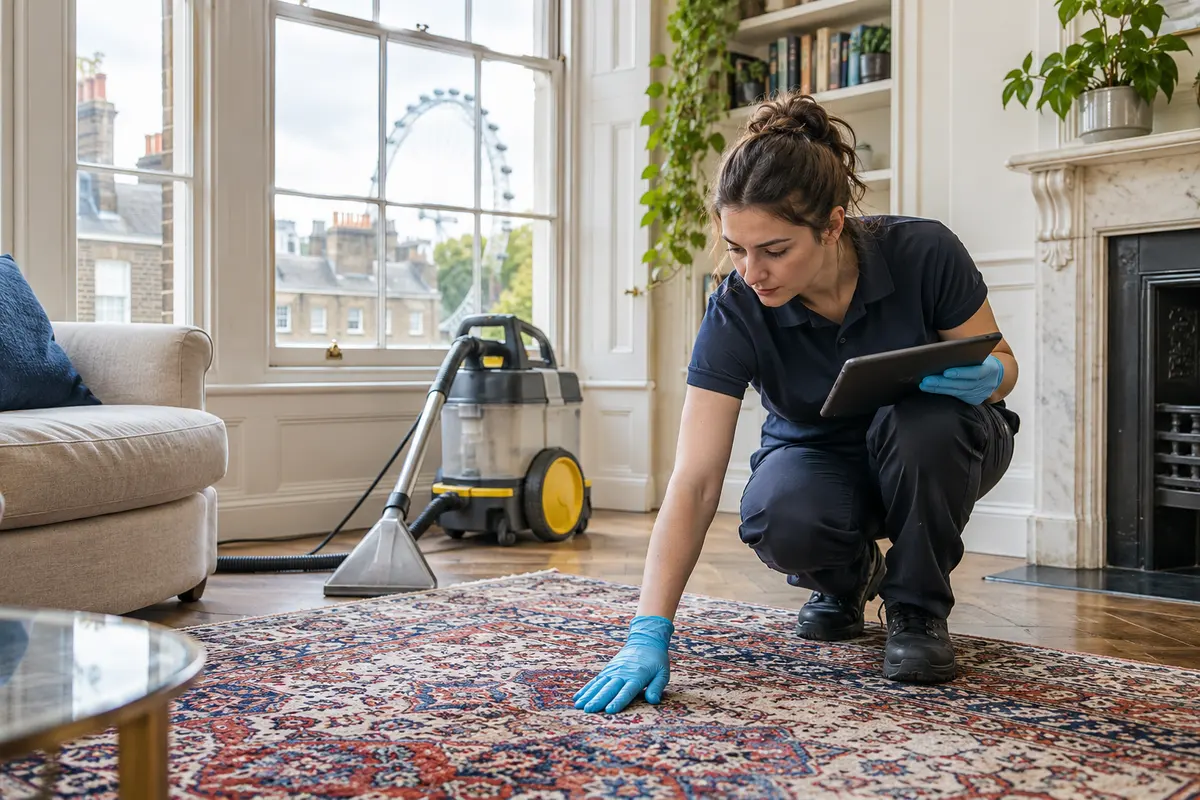
We assess loose rugs as individual items, taking into account the fibre, construction, backing, edges and any previous cleaning.
Can you clean my rug if it has no label?
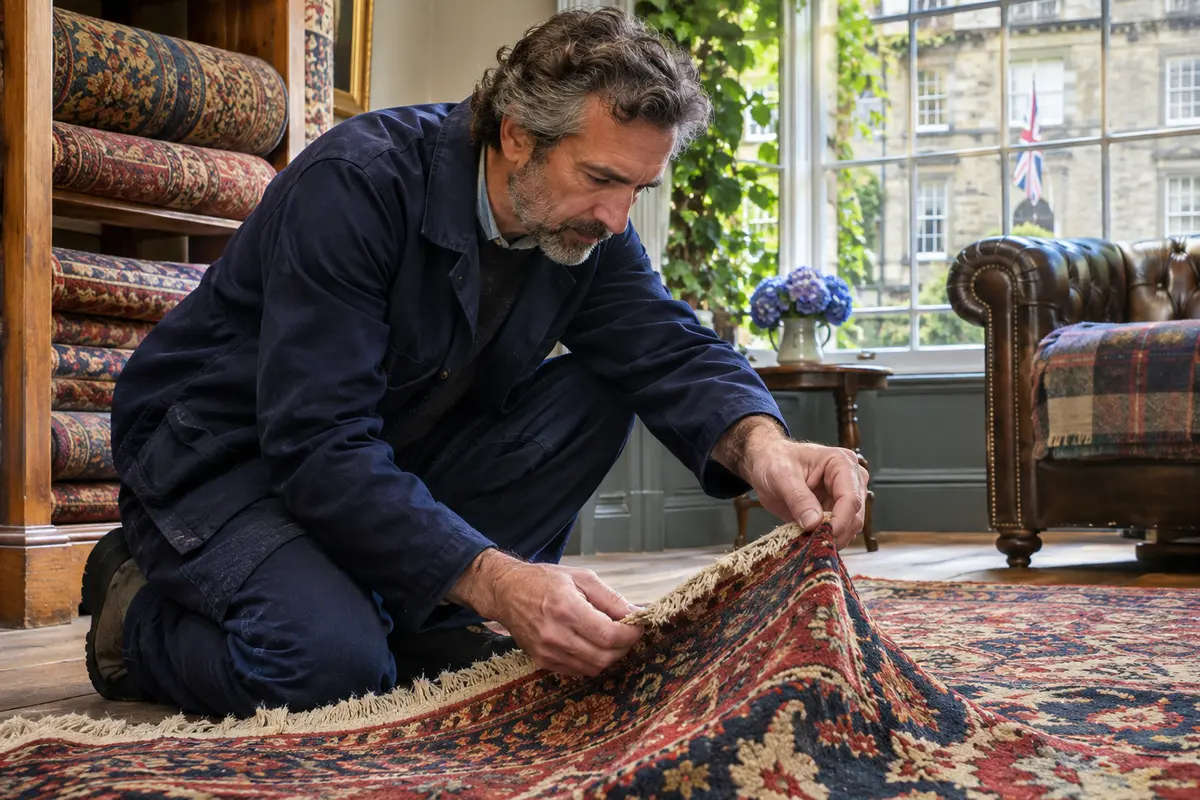
Tell us what you know about the rug, including where it came from and whether it has been cleaned before. Photos of the face, the underside and the edges can help the team discuss the right next step. We need to assess the rug before confirming treatment.
Should I mention a spill even if it has dried?
Yes. Tell us when it happened, what was spilt and whether you put anything on the mark. A dried spill may affect more than the upper surface of the rug. This information helps us assess the rug and discuss what we can reasonably do during the visit.
How we carry out the clean
Identify fibre and construction
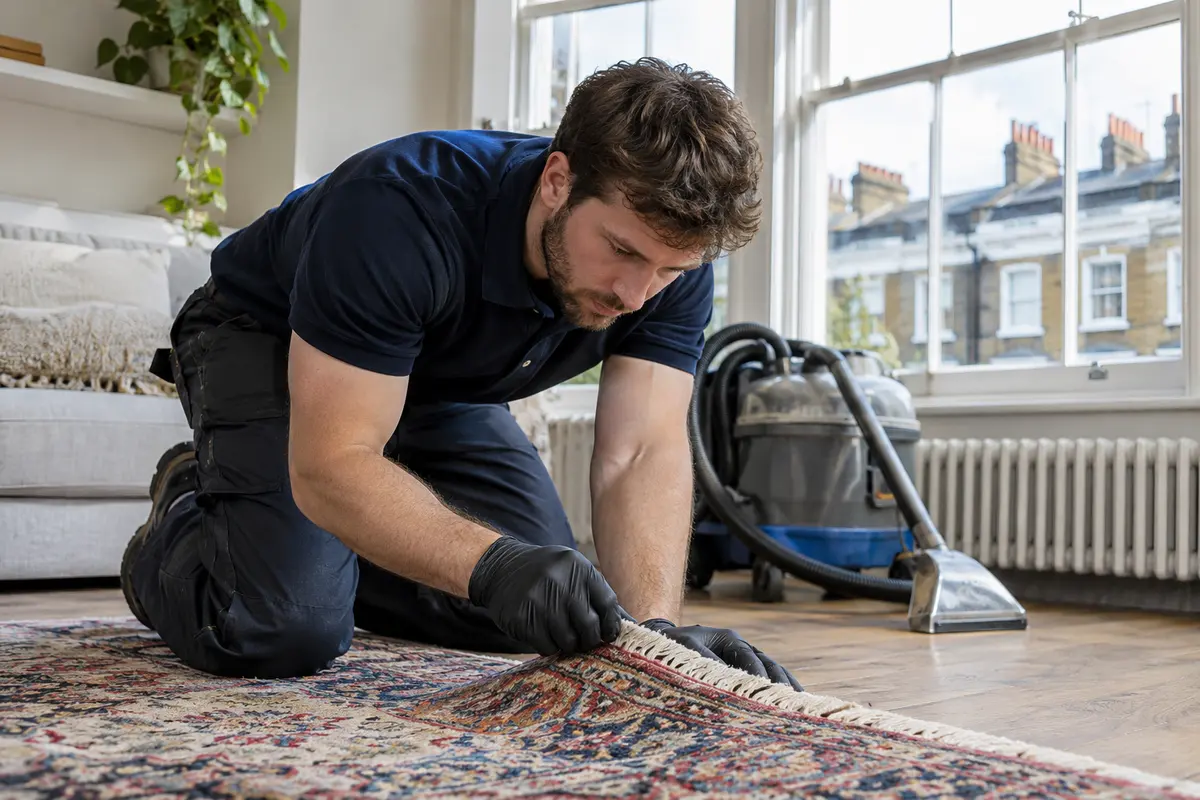
We consider the face, backing, fringe and edge finish. A machine-made runner and a hand-finished wool rug can have different care requirements. Send a photo of the label or tell us if the rug has been repaired or treated before.
Note spills and wear
Show us the areas that concern you, including discolouration, flattened pile and marks underneath. We assess visible wear and the apparent condition before discussing a method. Include the cause of a spill and products that have been used on it.
Confirm how we can access the rug
Describe the size and where the rug normally sits. If a dining table or heavy sofa anchors it in place, explain which areas can be reached. Mention whether the floor beneath needs care or protection during the booking.
Agree the suitable work
The construction and condition guide what we can clean and how the rug should be handled. Ask about fringes, loose fibres and repairs before agreeing the booking. We can discuss individual areas where the rug needs special attention.
Review handling after the visit
We explain the treatment carried out and any relevant drying or handling instructions. Tell us if the rug needs to be back in use by a certain time or if the room will be occupied soon after the appointment.
What’s included
| Area / item | Cleaning work | Important notes |
|---|---|---|
| Face and pile | Assess fibre and surface condition | Share label and history. |
| Edges and fringe | Inspect fragile finishes | Flag loose threads and repairs. |
| Backing | Consider material and condition | Mention backing that is brittle or shedding. |
| Spills | Discuss appropriate treatment | Describe substance, timing and earlier products. |
Preparing for the visit
The rug and floor underneath
We ask about the rug itself and where it is used. A small runner can sometimes be described by dimensions and a photo. A room-size rug under a dining table needs a discussion about which areas can be reached and whether the floor below requires protection. Tell us if the rug sits on timber, stone or a fitted carpet. Share the underside material if it is known, and tell us if a separate non-slip layer is present.
What we look at before treatment
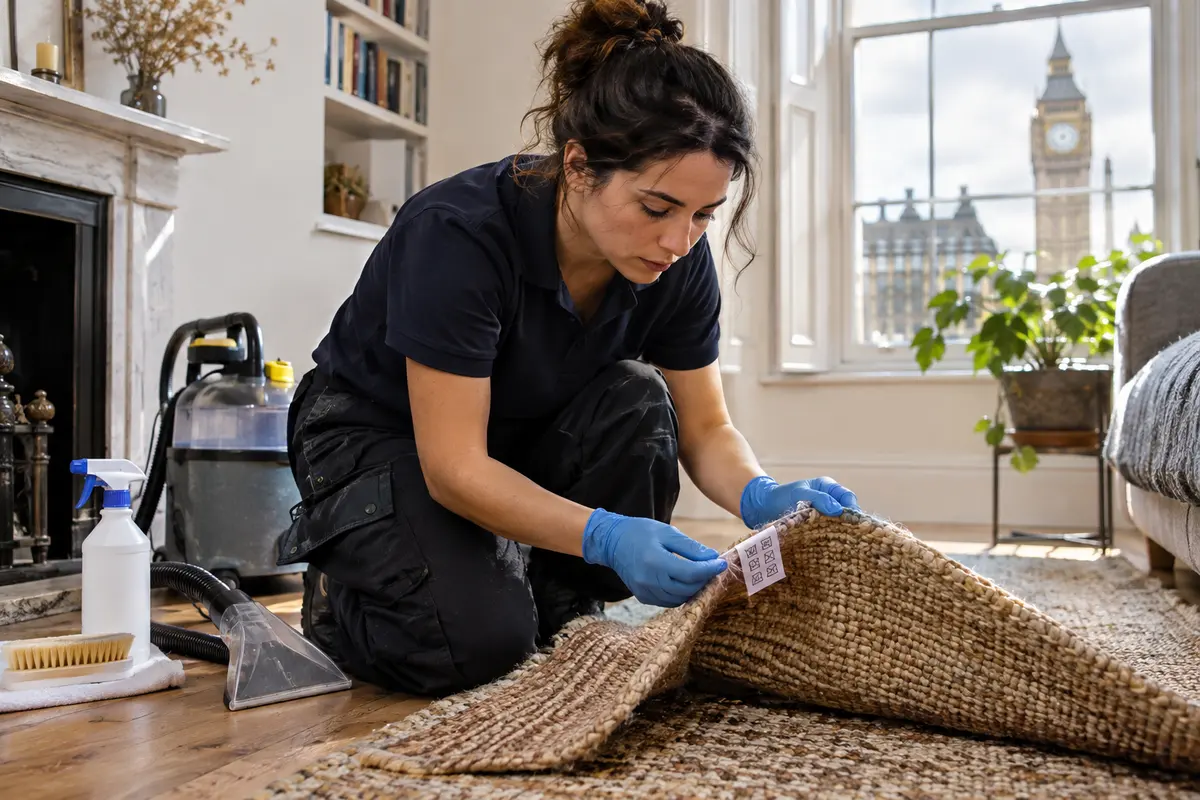
We consider variations in the surface, the backing, the binding and any decorative fringe. Look for a label and send a clear photograph if it is present. Describe the age and history when you know it, especially repairs or treatments that affected the colour. Marks on a rug can come from spills, sun exposure and wear. We inspect with that history in mind rather than treating every colour change as a stain.
Materials and access restrictions
Tell us if you believe the rug is wool, jute, a synthetic blend or a material with particular care instructions. A label can help, and the team can discuss what is appropriate for an unlabelled piece. If the rug cannot leave the room or the furniture cannot be moved, explain the access limits. Ask about the right way to handle the rug after treatment before arranging for a room to return to use.
Combining an enquiry
A flat with both loose rugs and fitted carpet benefits from an itemised request. List the loose pieces individually. Count the carpeted stairs and rooms separately. Tell us which item needs attention first, why it matters and when you need it back in use. At the end of the appointment, ask the cleaner to explain any area that was left untouched and any precautions for drying or placing the rug back on its usual floor.
Cleaning equipment and treatment
We assess rugs before choosing equipment and products. The team can discuss wool and synthetic rugs, as well as pieces that need special handling. Ask about collection and delivery if the rug cannot be treated conveniently in place.
Give a useful description of appearance
When you send photographs, show the front, back and edges, and include one close-up of the affected area. The team can then ask about the material, backing or an existing repair before you move it. Tell us if the rug is usually in direct sun or if the mark is only visible from a particular angle.
Prices and booking
Request a quote for the work listed above. Tell us the postcode, what you want us to clean, and when we can get in. We can check the rate and available appointments before you decide.
Tell us about each rug individually
If you have several pieces, use a short description for each one and include the measurements. For example, identify the long hallway runner separately from a deeper pile living room rug. Tell us if one has a fringe or backing that needs particular care. Where there is a label, include the material and cleaning instructions. Photos can help show the pattern and borders, but tell us about previous repairs or treatments even when those details are not visible in the photograph.
Book around access to the room
Give us the address, the floor level and whether the rug is beneath heavy furniture. Tell us if the room can be left clear while we discuss the treatment. If collection or delivery is required, ask what is available and confirm the details before booking. A rug that normally sits in a narrow hallway can affect everyday access while it is being treated or drying. Let the team know when people need to be able to walk through the area again.
What the cleaner can clarify on the day
We inspect the parts you have identified and can explain which areas deserve individual attention. Tell us which side of the rug usually faces the window and whether the visible colour change developed gradually. Existing wear, fading and repaired fibres can call for different handling from a recent spill. Do not rely on a description such as “clean the middle”. Show us the affected part and explain the outcome you are hoping for so we can talk it through.
How we handle room-size pieces and runners
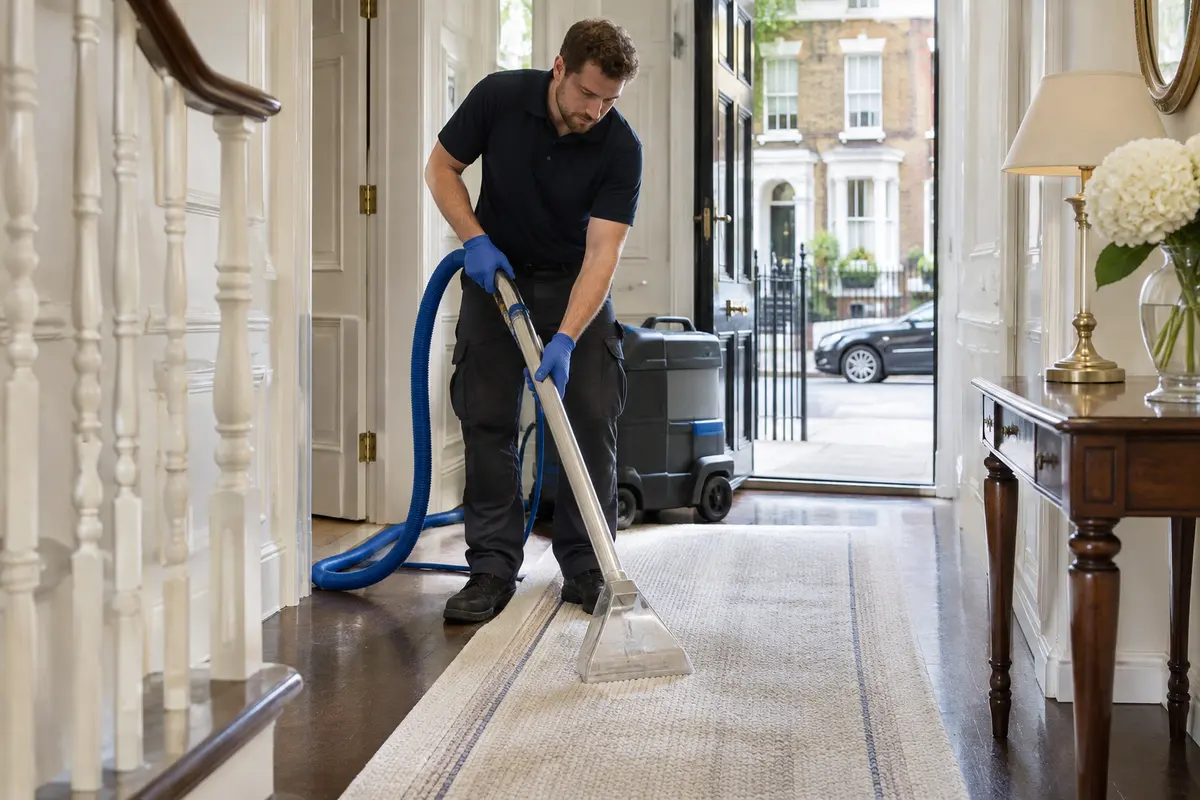
We consider the size of the rug and the route to reach it. A runner on a busy staircase or narrow hall can need a different access arrangement from a loose rug in an open sitting room. Mention clamps, tape or other fixings if they are present and tell us if the rug sits over an uneven floor. We can discuss what can be cleaned and how the piece should be handled after the visit.
Questions about this service
Can you look at fringes separately?
Tell us about fraying, repairs and marks at the edges.
Does colour matter?
Describe the colours and any previous dye transfer or fading.
What dimensions do you need?
Give us the length and width of each rug and identify runners.
Should I mention a rubber backing?
Yes, include it and let us know if it is worn or shedding.
Can you treat a rug and fitted carpet together?
List the rug and each carpeted area separately when you enquire.
Do you repair loose edges?
Discuss condition first. Cleaning and repairs are separate jobs.
Arrange your visit
Give the team the address, priority areas and a date that works for the property.